Who Is Phil Weiser? Inside the Career of Colorado's Attorney General
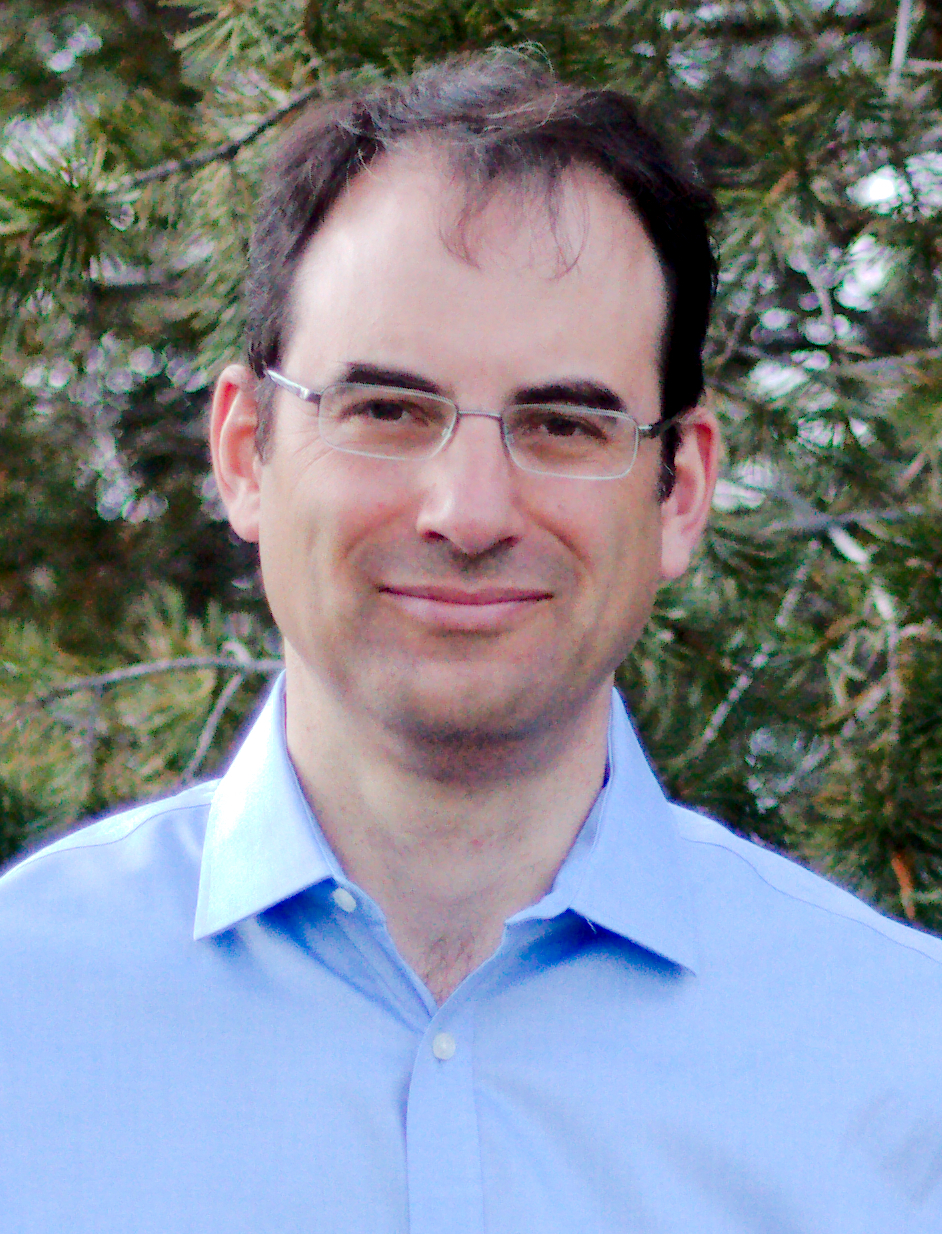
Phil Weiser, the 39th Attorney General of Colorado, is one of the more academically credentialed state attorneys general in the country and one of the few sitting AGs whose legal career began at the U.S. Supreme Court. Before taking office in January 2019, Weiser spent nearly two decades as a law professor at the University of Colorado, ran the law school for five years as its dean, and held senior positions at the U.S. Department of Justice and the White House National Economic Council. As Colorado's top lawyer he has built a portfolio focused on antitrust enforcement, opioid accountability, consumer protection, and — over the past year — a steady volume of multistate litigation against federal policy. In January 2025 he announced a campaign for the 2026 Colorado gubernatorial race, and at the Colorado Democratic Party state assembly in March 2026 he won 90% of the delegate vote, putting him at the top of the June primary ballot.
Early life and education
Philip Jacob Weiser was born May 10, 1968. His family's history is unusually present in his public biography: his maternal grandparents survived the Holocaust, and his mother Estare was born in the Buchenwald concentration camp in 1945, weeks before its liberation. Weiser has spoken in public remarks about how that family history shapes his views on the rule of law and the durability of democratic institutions.
He earned a bachelor's degree in political science from Swarthmore College in 1990, graduating with high honors, and a J.D. from New York University School of Law in 1994, where he was elected to the Order of the Coif and served as Articles Editor of the New York University Law Review.
Federal clerkships: Tenth Circuit and the Supreme Court
After law school Weiser clerked for Judge David M. Ebel of the U.S. Court of Appeals for the Tenth Circuit from September 1994 through August 1995. He then took a Supreme Court clerkship that is unusual in its structure: he served simultaneously as a clerk to retired Justice Byron R. White and to Justice Ruth Bader Ginsburg during the October Term 1995. Retired Justices of the Supreme Court are entitled to one law clerk each, and that clerk is typically shared with an active Justice — Justice White's clerks during his retirement years frequently worked alongside the chambers of one of the sitting Justices, in Weiser's case Justice Ginsburg.
The Ginsburg connection has remained a defining one. Weiser has described Justice Ginsburg as a personal mentor and has appeared at multiple Ginsburg memorial and tribute events since her death in September 2020. A photograph of Weiser and Justice Ginsburg is among the more widely-circulated images on his official biographies and at the law school he once led.
The Justice Department and the Antitrust Division
From 1996 to 1998 Weiser served as Senior Counsel to Assistant Attorney General Joel Klein in the Justice Department's Antitrust Division. The Klein-era Antitrust Division is best remembered for the United States v. Microsoft monopolization case, filed in May 1998, which became the largest contested antitrust matter the Division had taken on since AT&T two decades earlier. Weiser's portfolio in that period included telecommunications policy, software competition, and merger review work that emerged in the wake of the 1996 Telecommunications Act.
He returned to the Antitrust Division in 2009 as Deputy Assistant Attorney General under President Obama's first appointee to head the Division, Christine Varney, where he was responsible for international and policy work and helped lead the Division's revised approach to merger review. In 2010 he was detailed to the White House as Senior Advisor for Technology and Innovation to the Director of the National Economic Council.
Academic career: Colorado Law and Silicon Flatirons
Weiser joined the faculty of the University of Colorado Law School in 1999 as a professor of law and remained there in some capacity for two decades. His scholarly focus is in telecommunications, technology, and antitrust law. He is co-author of Digital Crossroads: American Telecommunications Policy in the Internet Age (MIT Press, 2005, with Jonathan Nuechterlein) — a leading reference text on U.S. telecommunications regulation that has gone through multiple editions — and a co-author of the Telecommunications Law and Policy casebook used in law schools across the country.
In 1999 he founded the Silicon Flatirons Center for Law, Technology, and Entrepreneurship at Colorado Law, which has since become one of the country's leading academic centers for technology policy and antitrust scholarship and has hosted Federal Trade Commissioners, Federal Communications Commissioners, sitting federal judges, and antitrust enforcers from both major parties. He also founded the Journal on Telecommunications & High Technology Law, a student-edited journal at the law school.
From June 2011 through July 2016 Weiser served as the 15th dean of the University of Colorado Law School. During his deanship the school launched a series of clinical and professional-development programs and grew the Silicon Flatirons Center's public-policy programming. He returned to full-time teaching after stepping down as dean in 2016 and continued in that role until taking office as Attorney General in January 2019.
Election to Attorney General — 2018 and 2022
In 2017 Weiser announced his candidacy for Colorado Attorney General as a Democrat, succeeding the term-limited Republican Cynthia Coffman. He won the November 2018 general election with 51.6% of the vote, defeating Republican George Brauchler — the District Attorney for Colorado's 18th Judicial District at the time — in a race that drew unusual national interest because of Weiser's federal antitrust background and the broader 2018 wave of state attorney general elections.
He was sworn in as the 39th Attorney General of Colorado on January 8, 2019, and was re-elected in 2022 with more than 54% of the vote, defeating Republican challenger John Kellner.
Notable cases and AG portfolio
The Purdue Pharma opioid litigation
Within months of taking office Weiser amended Colorado's existing Purdue Pharma lawsuit to add the company's owners — members of the Sackler family — as named defendants. Colorado was among the first states to pursue the Sacklers individually, a position that influenced the eventual multistate settlement structure. Across the various opioid manufacturer and distributor settlements that followed, Weiser's office secured approximately $912 million for Colorado, distributed under a state-county framework adopted by Weiser and county leaders to fund treatment and prevention programs.
The Catholic clergy abuse investigation
In October 2019 Weiser's office released the first of a series of independent reports into clergy abuse in the three Catholic dioceses of Colorado, naming 43 Catholic priests credibly accused of abusing more than 166 children. A final December 2020 report identified 52 priests and recommended changes to how the dioceses handle reports of abuse. The investigation was conducted under a unique cooperation agreement with the Archdiocese of Denver and the Dioceses of Colorado Springs and Pueblo, with former U.S. Attorney Bob Troyer as the independent investigator.
The multistate Google antitrust case
In December 2020 Weiser led a bipartisan coalition of 38 state attorneys general in filing what became the second major federal antitrust case against Google, focused on the company's general search and search advertising businesses. The state coalition's case was eventually consolidated with the parallel federal Department of Justice action filed earlier that year. In August 2024 the U.S. District Court for the District of Columbia issued a landmark liability ruling holding that Google had unlawfully maintained its monopoly in general search and search advertising. The remedies phase of the case continued through 2025 and into 2026, with Weiser's office continuing to participate in the multistate component.
The Kroger-Albertsons merger challenge
In 2024 Weiser brought a state antitrust action seeking to block the proposed merger of grocery giants Kroger and Albertsons, which together operate a substantial share of Colorado's supermarket capacity. The merger was ultimately blocked in December 2024 after two federal district judges — separately ruling in actions brought by the Federal Trade Commission and the Washington State Attorney General — found that the proposed transaction would substantially lessen competition. Colorado's parallel state action contributed to the discovery record cited in those federal rulings.
The Greystar consumer protection settlement
In December 2025 Weiser and the Federal Trade Commission announced a $24 million settlement with corporate landlord Greystar over the company's use of hidden fees that increased the effective rent paid by tenants beyond the advertised price. The settlement included disclosure reforms and restitution for affected Colorado renters and was part of Weiser's broader portfolio on housing affordability and rental-market consumer protection.
Other significant matters
Weiser's office has also joined the multistate antitrust action against rental-pricing software RealPage, alleging that the company facilitated coordinated pricing among landlords; a multistate antitrust action against ticketing-and-venue conglomerate Live Nation/Ticketmaster; and a steady volume of consumer-protection enforcement matters under the Colorado Consumer Protection Act. According to a review by The Colorado Sun, since President Trump's January 2025 inauguration Weiser has joined or led 64 multistate lawsuits challenging federal executive actions, with 34 of those actions resulting in injunctions blocking the challenged policy as of April 2026.
2026 gubernatorial campaign
On January 2, 2025, Weiser announced his candidacy for the 2026 Colorado gubernatorial election to succeed term-limited Governor Jared Polis, becoming the first major candidate to enter the race. U.S. Senator Michael Bennet later announced a candidacy for the same seat, setting up a high-profile primary. At the Colorado Democratic Party State Assembly on March 28, 2026, Weiser received 90% of the delegate vote, securing top-line ballot placement for the June 30, 2026 primary. According to campaign finance reports, Weiser's campaign began 2026 with approximately $3.5 million in cash on hand and raised an additional $822,000 in the first quarter of the year. A Super PAC supporting Senator Bennet, Rocky Mountain Way, has been active on the Bennet side of the primary.
Personal life
Weiser married Heidi Wald, a physician and University of Colorado School of Medicine professor, in Philadelphia in 2002. They have two children and live in Denver.
Frequently asked questions
What was Phil Weiser's career before becoming Colorado Attorney General?
Weiser spent most of his career in two parallel tracks: federal antitrust and technology-policy work, and academic legal scholarship. His federal positions included Senior Counsel in the DOJ Antitrust Division (1996–1998), Deputy Assistant Attorney General in the Antitrust Division (2009–2011), and Senior Advisor for Technology and Innovation at the National Economic Council (2010). His academic career was at the University of Colorado Law School, where he was a professor from 1999 onward and dean from 2011 to 2016.
What Supreme Court Justices did Phil Weiser clerk for?
Weiser clerked simultaneously for retired Justice Byron White and Justice Ruth Bader Ginsburg during the October Term 1995. Retired Justices of the Supreme Court are entitled to one law clerk each, traditionally shared with the chambers of an active Justice; Weiser's clerkship arrangement reflected that practice. Before his Supreme Court clerkship he clerked for Judge David Ebel of the Tenth Circuit.
What is the Silicon Flatirons Center?
Silicon Flatirons is the technology, law, and entrepreneurship center at the University of Colorado Law School. Weiser founded it in 1999. It hosts academic programs, public-policy conferences, and works closely with the Boulder-Denver technology industry. Its annual conferences regularly bring sitting FCC commissioners, FTC commissioners, federal judges, and antitrust enforcers to speak on technology and competition policy.
What books has Phil Weiser written?
Weiser is co-author of Digital Crossroads: American Telecommunications Policy in the Internet Age (MIT Press, 2005, with Jonathan Nuechterlein), a leading reference work on U.S. telecommunications regulation. He is also a co-author of the Telecommunications Law and Policy casebook used in U.S. law schools and has published widely in legal journals on antitrust, telecommunications, and innovation policy.
Is Phil Weiser running for governor in 2026?
Yes. Weiser announced his candidacy on January 2, 2025 to succeed term-limited Governor Jared Polis. At the Colorado Democratic Party State Assembly on March 28, 2026, he received 90% of the delegate vote. He faces U.S. Senator Michael Bennet in the June 30, 2026 Democratic primary. The general election is November 3, 2026.
Sources
- Phil Weiser — Wikipedia — biographical overview, education, career timeline.
- Phil Weiser — Ballotpedia — election history and campaign records.
- Colorado Attorney General — Official site — official biography, press releases on Purdue Pharma, Catholic clergy investigation, Greystar, and Trump-administration litigation.
- University of Colorado Law School faculty page — academic positions, deanship, scholarship.
- Silicon Flatirons Center — founding history, programs, alumni and speakers.
- U.S. Department of Justice Antitrust Division — context on the Klein-era and Varney-era Antitrust Division work.
- Colorado Public Radio — Weiser announces 2026 governor campaign (Jan. 2, 2025)
- Colorado Newsline — Weiser gubernatorial announcement
- Phil for Colorado — official campaign site
- Weiser statement on Google search remedies court opinion (Sept. 2025)
- Nuechterlein, J. & Weiser, P., Digital Crossroads: American Telecommunications Policy in the Internet Age (MIT Press, 2005).
This profile is part of a series on the U.S. state attorneys general. Profiles are intended as a neutral biographical resource focused on professional and legal career; they are not endorsements and do not represent the views of TheCompleteLawyer.com.