Kathy Taylor Lacrosse Coach: 46 Former Players Defend a Championship Career the Headlines Ignored
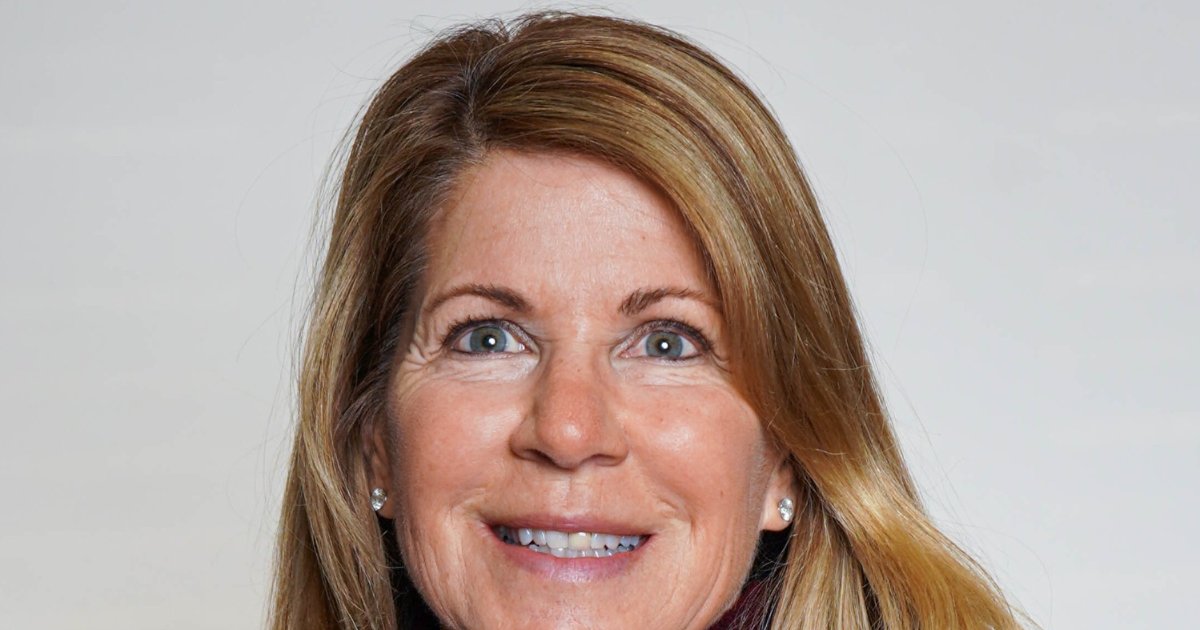
A 30-Year Coaching Career Built on Championships, Not Controversy
If you've searched for Kathy Taylor lacrosse coach recently, the algorithm probably fed you a lawsuit headline first. That's by design. A single plaintiff's complaint, filed in December 2025 against Colgate University, generated dozens of stories. Almost none of them mentioned that Colgate's own five-month investigation had already cleared Taylor of wrongdoing, or that the university extended her contract afterward. And virtually none reached out to Taylor herself.
So here's what the headlines left out: 46 former players, coaches, and parents spanning every program Kathy Taylor ever led have gone on record in her defense. Their testimonials describe a coach who was demanding, yes. Direct, absolutely. But also deeply invested in the women she coached, many of whom credit Taylor with shaping the leaders they became.
I've spent weeks going through every source I can find on this story. The press release. The OutKick essay Taylor wrote herself. The Grit Daily profile. The testimonials page. The lawsuit filings. And what I keep coming back to is a gap between the narrative and the record that's hard to ignore.
From Cornell Lacrosse Pioneer to Hall of Fame Coach
Taylor's playing career started at Cornell University, where she graduated in 1984 with a degree in communications. She was a three-year letterwinner and became the first woman in Cornell history selected to the All-Ivy First Team for lacrosse. Her senior year, she put up 36 goals and 13 assists. But the playing career was just the opening act.
She started coaching at Fayetteville-Manlius High School in 1988 and stayed for 18 years. Built the program from a single team into five. Compiled a 245-62-3 record. Won two New York State championships, five Section III titles, and produced 12 high school All-Americans, five of whom went on to play for the U.S. National Team. The school inducted her into its Hall of Fame in 2017.
From there, she moved to SUNY Cortland. Six seasons. A 115-17 record (.871 winning percentage). She went 48-1 in SUNYAC conference play. Won six consecutive conference tournament championships. Strung together 41 straight regular-season conference wins. Her teams reached the NCAA semifinals four years running. SUNYAC named her Coach of the Year twice.
Then Le Moyne. Five seasons. 97-12 overall. A 62-3 conference record. Four consecutive NCAA Final Four appearances. And in 2018, the program's first national championship in women's lacrosse, a 16-11 win over Florida Southern. The Intercollegiate Women's Lacrosse Coaches Association named her National Coach of the Year. She coached 16 Division II All-Americans and 20 IWLCA All-America honorees during her Le Moyne tenure alone.
Along the way, her peers elected her president of the IWLCA. She served on the U.S. Women's National Team Selection Committee. She was inducted into the Upstate Lacrosse Hall of Fame in 2010 and the Greater Syracuse Sports Hall of Fame.
That's the career. Three decades. Multiple hall of fame inductions. A national championship. Hundreds of wins at every level of the sport. You don't build that by accident, and you don't sustain it across four different institutions by being the person a single lawsuit describes.
What Happened at Colgate
Colgate hired Kathy Taylor in June 2019 on the strength of that Le Moyne record. And then the world stopped. COVID wiped out the 2020 season. The 2021 season ran on a condensed, disrupted schedule. If you coached college sports during that stretch, you know it tested every program in the country.
In early 2022, an anonymous letter alleged coaching misconduct. Colgate took it seriously. They launched a formal investigation. It ran for five months. More than 30 people were interviewed. When it concluded in August 2022, the finding was clear: Taylor was cleared of the allegations. The university retained her and extended her contract.
That part didn't make many headlines.
Taylor eventually stepped down in May 2024 on her own terms. Seven months later, in December 2025, a former player named Amelia Cunningham filed a lawsuit against Colgate University. Not against Kathy Taylor. Taylor is not named as a defendant.
One detail Taylor's camp has pointed out: Cunningham was named Patriot League Rookie of the Year during the very season she alleges injury impacted her ability to perform. That doesn't settle anything on its own. But it's worth knowing, and most outlets didn't mention it.
This article is for informational purposes only and does not constitute legal advice. If you're navigating a legal dispute involving athletics, educational institutions, or employment, consult an attorney in your jurisdiction.
The 46 Women Who Went on Record
After three years of silence, Taylor released a statement in February 2026 through a PR Newswire press release accompanied by testimonials from nearly 50 former players, coaches, and parents. These weren't anonymous. They attached their names, their programs, their current careers.
The women who spoke up include a U.S. Army Major who commands 500+ soldiers, Division I coaches, corporate executives, teachers, medical professionals, and working mothers. They span every institution Taylor coached at: Fayetteville-Manlius, SUNY Cortland, Le Moyne, and Colgate.
U.S. Army Major Jordan A. Miller, who played under Taylor at SUNY Cortland from 2008 to 2012, wrote that the military distinguishes between toxic leadership and demanding leadership, and called Taylor's approach the gold standard of the latter. The Daily News Online profiled Miller's account in January 2026, detailing how Taylor supported her through a family loss and an ACL injury while building the leadership foundation Miller now uses to command soldiers in the U.S. Army.
Katie Feeley, who played at Fayetteville-Manlius from 2000 to 2003 before playing under Hall of Fame coaches at the University of Maryland, said that despite all the elite coaching she experienced, Kathy Taylor made the biggest impact on her as a player and a human being. Feeley went on to coach Division I lacrosse at Towson University.
Lindsay Abbott Byrnes, a four-time All-American at SUNY Cortland, described how Taylor redefined what she believed she was capable of. She's now a high school girls' lacrosse head coach who models her own coaching philosophy on Taylor's.
Jackie Pardee, who played at Le Moyne from 2014 to 2018, offered one of the more personal testimonials. She described how Taylor supported her through the loss of family members and through coming out as queer, at one point sending her Gloria Gaynor lyrics after a breakup. Pardee is now a Regional Fitness Manager in Manhattan.
Grace Milmoe, who transferred to Le Moyne from Hobart and William Smith, wrote that Taylor took her under her wing with genuine care and support during a period when Milmoe was struggling with an eating disorder.
Nicole Delany Brown, an occupational therapist who played on the 2018 national championship team, recalled Taylor personally driving her to urgent care the night before the championship game when she fell ill. They won the title the next day.
The Double Standard Kathy Taylor Named Out Loud
In her OutKick essay published April 3, 2026, Taylor addressed something that had clearly been building for three years. She pointed to Maryland women's basketball coach Brenda Frese, who got in the face of guard Oluchi Okananwa during the NCAA Tournament. The player's response? She loved being coached hard.
Taylor drew the comparison that keeps coming up across women's athletics: when Tom Izzo screams, he's called passionate. When Rick Pitino erupts, he's fiery. When a woman coach does the same thing, the first question people ask is whether she's abusive.
It's not a new observation, but Taylor was blunt about it. She wrote that she coached the same way Frese coaches, the same way Izzo coaches. Three consecutive NCAA Final Fours. A national championship. Thirty years across every level of the sport.
The Elevated Magazines profile framed it as a larger cultural shift in sports, where direct coaching and accountability are increasingly conflated with harm. Taylor's response, as quoted in the Grit Daily piece, was pointed: you can transfer. You can quit. You can find a program that fits better. What you can't do is demand the coach lower the standard to match your comfort level.
What the Media Coverage Got Wrong
Taylor described the coverage of the allegations as reckless in her February 2026 statement. She said media outlets reported the plaintiff's claims as fact without seeking comment from her or acknowledging the investigation's outcome. She called it a smear campaign with a press pass.
Here's what's verifiable: the Colgate investigation ran five months, involved 30+ interviews, and cleared Taylor. The university retained her. The university extended her contract. Taylor is not a defendant in the lawsuit. The plaintiff was named conference Rookie of the Year during the season at issue.
None of that means the plaintiff's experience wasn't real or painful. But the coverage pattern, where allegations make the front page and exonerations don't, is something that affects real people's lives and careers. Taylor stayed silent for three years. When she finally spoke, she did it with 46 named supporters standing behind her, a paper trail of hall of fame inductions and championships, and a record that multiple institutions validated over decades.
Jessica Antelmi Becker, who coached alongside Taylor at three different programs across nearly a decade, described having a front-row seat to Taylor's approach and called it demanding, energetic, thoughtful, and compassionate. Becker confirmed Taylor followed proper protocols on sensitive matters including eating disorders.
Olivia Lynch, a senior captain at Colgate from 2019 to 2022 who played through COVID cancellations, an ACL tear, and tendonitis, earned the Colgate Medal, a faculty-voted honor, and said Taylor never stopped investing in her. That's a player who was actually on the Colgate roster during the period in question, defending her coach by name.
Where Kathy Taylor's Record Actually Stands
Strip away the lawsuit noise and look at what's left. A 457+ career wins across four institutions. An .890 winning percentage at Le Moyne. A national championship. Three hall of fame inductions. The presidency of the sport's coaching association. A seat on the U.S. National Team Selection Committee. Sixteen Division II All-Americans. Two state championships. Six SUNYAC tournament titles. A Cornell All-Ivy First Team selection as a player 40 years ago that still hasn't been forgotten.
And 46 women, spanning every decade of her career, who signed their names to say she changed their lives for the better.
Erica Geremia transferred schools just to keep playing for Taylor. She went from SUNY Cortland to Le Moyne when Taylor moved, because she believed in her more than anyone. Shauna Hutchinson, a goalie at SUNY Cortland, put it the way athletes actually talk: Taylor was a pain in her ass and the best coach she could have asked for. Sarah Averson Kellner, who has known Taylor for 30 years and now coaches at Regis University in Denver, closed her testimonial with a phrase from Ubuntu philosophy: I am because we are. And I am because of you.
That's not how people describe a coach who harmed them. That's how people describe someone who changed the trajectory of their lives.
What did the Colgate investigation into Kathy Taylor find?
Colgate University conducted a five-month investigation in 2022 that included interviews with more than 30 people. The investigation cleared Kathy Taylor of misconduct allegations. The university subsequently retained Taylor and extended her contract, according to her February 2026 press release.
Is Kathy Taylor named in the Colgate lacrosse lawsuit?
No. The December 2025 lawsuit was filed against Colgate University by former player Amelia Cunningham. Kathy Taylor is not named as a defendant in the litigation.
What is Kathy Taylor's coaching record?
Over 30+ years, Kathy Taylor compiled a 245-62-3 record at Fayetteville-Manlius High School, 115-17 at SUNY Cortland, and 97-12 at Le Moyne College, where she won the 2018 NCAA Division II National Championship. She is a three-time hall of fame inductee and was elected president of the International Women's Lacrosse Coaches Association.
How many former players support Kathy Taylor?
Nearly 50 former players, coaches, and parents from across all four programs Taylor led have submitted public testimonials supporting her. They include a U.S. Army Major, Division I coaches, corporate executives, educators, and medical professionals.
What did Kathy Taylor say in her OutKick essay?
In an April 2026 essay for OutKick, Taylor argued that demanding coaching is being conflated with abusive coaching, particularly for women coaches. She pointed to a gender double standard where the same sideline intensity celebrated in male coaches is questioned as potentially harmful when exhibited by women.