How to Take Someone to Small Claims Court: The Step-by-Step Guide
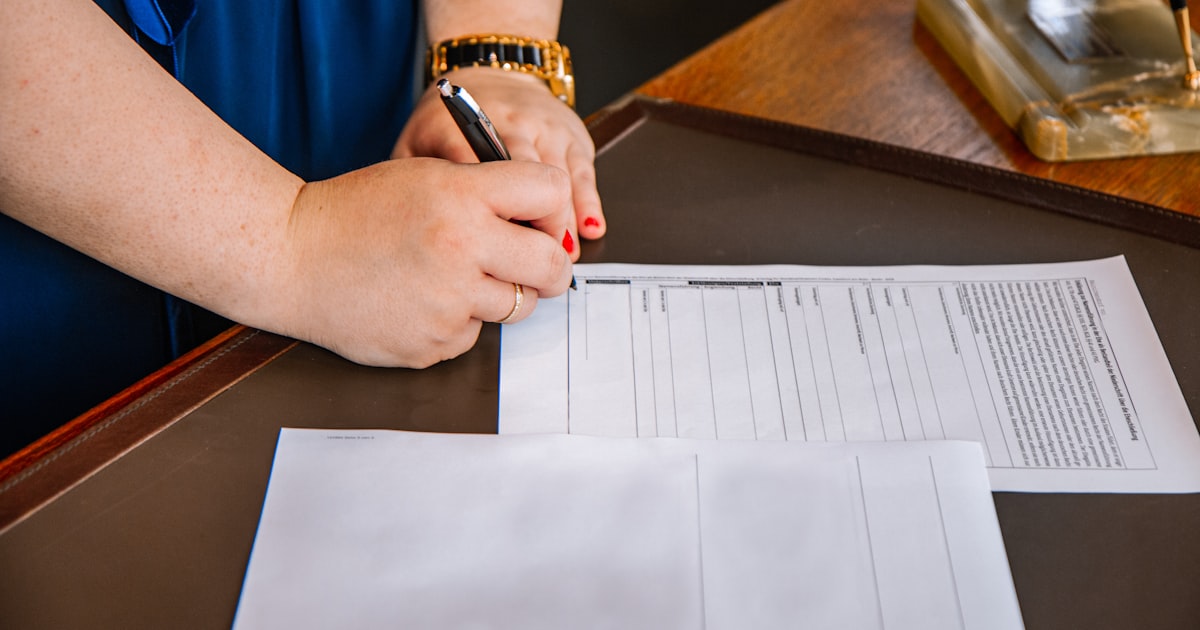
Taking someone to small claims court is one of the most underused tools in consumer law. The process is designed for ordinary people without lawyers, the filing fee is typically under $100, and the timeline from filing to hearing usually runs 30 to 90 days. Most adults could handle a small claims case from start to finish over a few hours of preparation and one short court appearance — but most don't, because the process feels intimidating from the outside. This guide walks through what filing actually involves, the documents to prepare, what to expect at the hearing, and the post-judgment steps that determine whether you actually get paid.
For the broader picture of how small claims court works, see our small claims court pillar guide.
Before you file: the four-question filter
Run your situation through these questions before spending the time and filing fee:
1. Is the amount within your state's small claims limit?
Limits range from $2,500 in Rhode Island to $25,000 in Tennessee, with most states between $5,000 and $15,000. If your claim exceeds the limit, you have two options: file in regular civil court (with formal procedure and likely an attorney), or waive any amount above the limit and file in small claims anyway. Many people choose the latter for cases just slightly above the limit because the procedural simplicity outweighs the foregone recovery.
2. Have you tried demand first?
Send a written demand letter before filing. Many disputes settle when the defendant receives a formal letter mentioning that small claims is the next step. The demand letter should:
- State the facts clearly
- State the specific amount owed
- Reference the underlying obligation (loan, contract, statute)
- Give a specific deadline (typically 14 to 30 days)
- State that small claims court is the next step if the demand is not met
- Be sent by certified mail with return receipt requested for proof of delivery
Some states (security deposit cases in particular) require pre-suit demand as a procedural prerequisite. Even where not required, the demand letter establishes the record and is admissible at the hearing.
3. Is the defendant collectable?
Winning a judgment doesn't put money in your pocket — collecting on it does. A defendant with a steady job, bank accounts, or real estate is collectable through wage garnishment, bank levy, or property liens. A defendant with no assets, no job, or who deliberately conceals assets ("judgment-proof") may never pay regardless of the judgment.
Practical pre-filing collectability check:
- Does the defendant own real estate? (Public county records show ownership.)
- Do you know the defendant's employer? (Wage garnishment requires this.)
- Do you know the defendant's bank? (Bank levy requires this.)
- Has the defendant declared bankruptcy recently? (Bankrupt defendants are typically uncollectable for the discharged period.)
Filing against a judgment-proof defendant produces a judgment that may eventually be collected when circumstances change but provides no immediate relief.
4. Is the relationship worth more than the dispute?
Suing a friend, family member, neighbor, or business partner has consequences beyond the financial outcome. The lawsuit is public record. The relationship may not survive. For some disputes that's the right tradeoff; for others it isn't. Worth thinking through before filing.
Filing the case: step by step
Step 1: Identify the right court
Small claims jurisdiction is typically:
- The county where the defendant lives, OR
- The county where the contract was performed, OR
- The county where the injury or breach occurred
Filing in the wrong county can produce dismissal. If you're unsure, the court clerk can typically advise. State court self-help websites (California, New York, etc.) provide jurisdiction guidance.
Step 2: Get the court's small claims forms
Most small claims forms are downloadable from the court's website. Common forms by state:
- California: Form SC-100 (Plaintiff's Claim and Order to Go to Small Claims Court)
- Texas: Justice Court Petition forms (varies by county)
- Florida: Statement of Claim Form 7.330
- New York: Notice of Claim form (varies by county/city court)
- Other states: Generally available on court self-help sites
Step 3: Complete the complaint
Required information:
- Plaintiff(s): Your full legal name and current address.
- Defendant(s): Full legal name (not nicknames or business "DBA" names without the legal entity name) and current address. For business defendants, include the business's legal entity name and the registered agent for service.
- Statement of claim: A brief description of what happened. Most forms allow a few sentences. Be specific: dates, dollar amounts, what was promised, what happened, what wasn't paid.
- Amount sought: The total dollar amount you are claiming. Itemize if possible (principal $X, interest $Y, costs $Z).
- Signature and date.
Step 4: Pay the filing fee
Filing fees range from $30 to $100 in most states. Fee waivers are available for low-income filers — typically requiring proof of income below state poverty thresholds or receipt of public benefits.
Step 5: Serve the defendant
The defendant must be formally notified of the lawsuit. Methods vary by state:
- Sheriff or constable service. Available in most counties for $30 to $75.
- Licensed process server. Private firms; typically $50 to $100.
- Certified mail. Permitted in some states (but not all) when the defendant accepts delivery.
- Personal delivery by an adult who is not a party. A friend or family member (not the plaintiff) can serve in some states.
Improper service can void the case. Get the rules right.
Preparing for the hearing
You'll typically receive a hearing date 30 to 90 days after filing. Use the time:
Build your evidence binder
- The contract or agreement at issue (lease, loan agreement, work order, written promise)
- All written communications: emails, texts, letters, voicemails (transcribed if possible)
- Photographs of the property, the damage, the defective product
- Receipts, invoices, payment records, canceled checks, bank statements showing the transactions
- The pre-suit demand letter and proof of delivery
- Witness statements (written) from anyone who can corroborate your version
- For physical defendants, any expert evaluation or estimates (auto repair estimates, contractor evaluations)
Bring originals plus three or four copies — one for the judge, one for the defendant, one for your records, plus a backup. Organize the binder by category with tabs.
Outline your presentation
Plan a 5-to-10-minute presentation:
- Who you are and what happened (1 minute). The 30-second version of the dispute.
- The underlying obligation (1 minute). Lease, loan, contract — what the defendant agreed to do.
- The breach (2 minutes). What the defendant did or didn't do.
- The damages (2 minutes). The specific dollar amount and how it's calculated.
- Walk through key documents (3 minutes). Hand the judge the relevant pieces; explain briefly.
- Conclude (30 seconds). Re-state the amount sought.
Practice once or twice before the hearing. Don't memorize a script; the goal is being able to walk through the case clearly.
Anticipate the defendant's argument
What is the defendant likely to say in response? Common defenses:
- "I never agreed to that."
- "They didn't perform their side of the agreement."
- "I already paid."
- "The work was defective so I shouldn't have to pay."
- "The other party owes me money — countersuit."
Have your rebuttal ready. Documentary evidence is the strongest answer to most defenses.
At the hearing
- Arrive 15 to 30 minutes early. Court security and check-in take time.
- Dress respectfully. Business casual minimum; the judge sees the courtroom as a formal space.
- Address the judge as "Your Honor." Standard courtroom courtesy.
- Speak only when invited. The judge will direct the proceeding. Don't interrupt the defendant; you'll have your turn.
- Stick to the relevant facts. Don't argue about the larger relationship or the defendant's character. Focus on the legal claim.
- Bring exact dollar calculations. Judges often ask "how do you arrive at that amount?"
- Be respectful even when disagreeing. Judges notice tone.
After the hearing: collecting on the judgment
If you win, the court issues a judgment ordering the defendant to pay you the awarded amount. The judgment alone doesn't transfer money. To collect:
- Wait the post-judgment period. Most states allow the defendant 14 to 30 days to pay voluntarily before enforcement.
- Send a written demand for payment. Reference the judgment, give a specific deadline, identify your preferred payment method.
- If unpaid, pursue formal collection. Wage garnishment (court order to defendant's employer to withhold wages); bank levy (court order to defendant's bank to seize funds); property lien (recording the judgment against any real estate the defendant owns).
- If you don't know the defendant's employer or bank, conduct asset discovery. Most states allow post-judgment depositions or interrogatories to compel the defendant to disclose income and assets.
- Renew the judgment if needed. Most state judgments last 5 to 20 years and can typically be renewed before expiration.
Collection costs (filing fees for garnishment, sheriff fees, etc.) are typically recoverable from the defendant on top of the original judgment.
If you lose
Appeal rights vary substantially by state. California allows defendants but not plaintiffs to appeal small claims judgments. Other states allow either party to appeal, often as a "trial de novo" in a higher court. Appeals typically must be filed within 30 days. Even when appeal is available, the additional cost and complexity often make appeal economically irrational unless the dollar amount is significant.
If you lose and don't appeal, the case is over. The defendant doesn't owe you anything. If you've made a counterclaim against the defendant, the result on that runs separately.
The bottom line
Taking someone to small claims court is procedurally accessible — most adults can handle the process from start to finish without hiring a lawyer. The variables that determine success are mostly upstream: pick the right court, prepare your documents, anticipate the defense, focus on the legal claim rather than the larger story. The variables that determine actual recovery are even more upstream: a collectable defendant and solid documentary evidence outweigh procedural sophistication every time. For cases that meet those criteria, small claims court is one of the most useful tools in consumer law.
Frequently asked questions about taking someone to small claims court
How much does it cost to file a small claims case?
Filing fees range from $30 to $100 in most states. Service fees add another $30 to $100. Total cost to file and serve typically runs $60 to $200. Fee waivers are available for low-income filers. Costs paid out of pocket are typically recoverable from the defendant if you win.
How do I find the defendant's address to serve them?
If the defendant is an individual: their last known residential address; voter registration records; DMV records (sometimes available with court process); public records searches. If the defendant is a business: state business registration records list registered agents for service. The court clerk can sometimes provide guidance.
What if the defendant doesn't show up to the hearing?
You typically win by default — the judge enters judgment in your favor without needing to hear the defendant's side. Default judgments are valid and enforceable like any other judgment. The defendant may have limited rights to set aside the default in some states for good cause, but those motions are rarely granted without a strong showing.
Can I bring witnesses to the hearing?
Yes. Witnesses can testify in person; their testimony is evidence the judge considers. Some states also allow written witness statements (declarations or affidavits) as evidence. Bring witnesses for facts you cannot prove through documents alone — what the defendant said, what was observed, what was promised.
If the defendant has no money, is filing pointless?
Not necessarily, but it's important to understand what you're getting. A judgment is enforceable for years (typically 5 to 20, often renewable). If the defendant's circumstances change — gets a job, buys property, inherits money — the judgment can be enforced then. The judgment itself is enforceable through wage garnishment, bank levy, and property liens whenever the defendant has reachable assets. The downside is that during periods when the defendant is judgment-proof, you collect nothing.
Sources
- State small claims procedures (sample): California Code of Civil Procedure § 116.220; Texas Government Code Chapter 27; Florida Small Claims Rules
- Court self-help resources: California Courts Small Claims Self-Help; NY Small Claims Court; Texas Courts Self-Represented Litigants
- Federal authority (collection): Fair Debt Collection Practices Act, 15 U.S.C. §§ 1692-1692p
- Practitioner resources: Nolo — Small Claims Court Resources
- Related TCL coverage: Small Claims Court Pillar Guide; What Is Small Claims Court; All Legal Guides
This article is general information about taking someone to small claims court, not legal advice. Procedural rules vary substantially by state and locality. For advice on a specific small claims case, consult your local court's self-help resources or a licensed attorney in your jurisdiction. The Complete Lawyer is an independent publisher.