Clear a Bench Warrant Without Going to Jail: The Recall
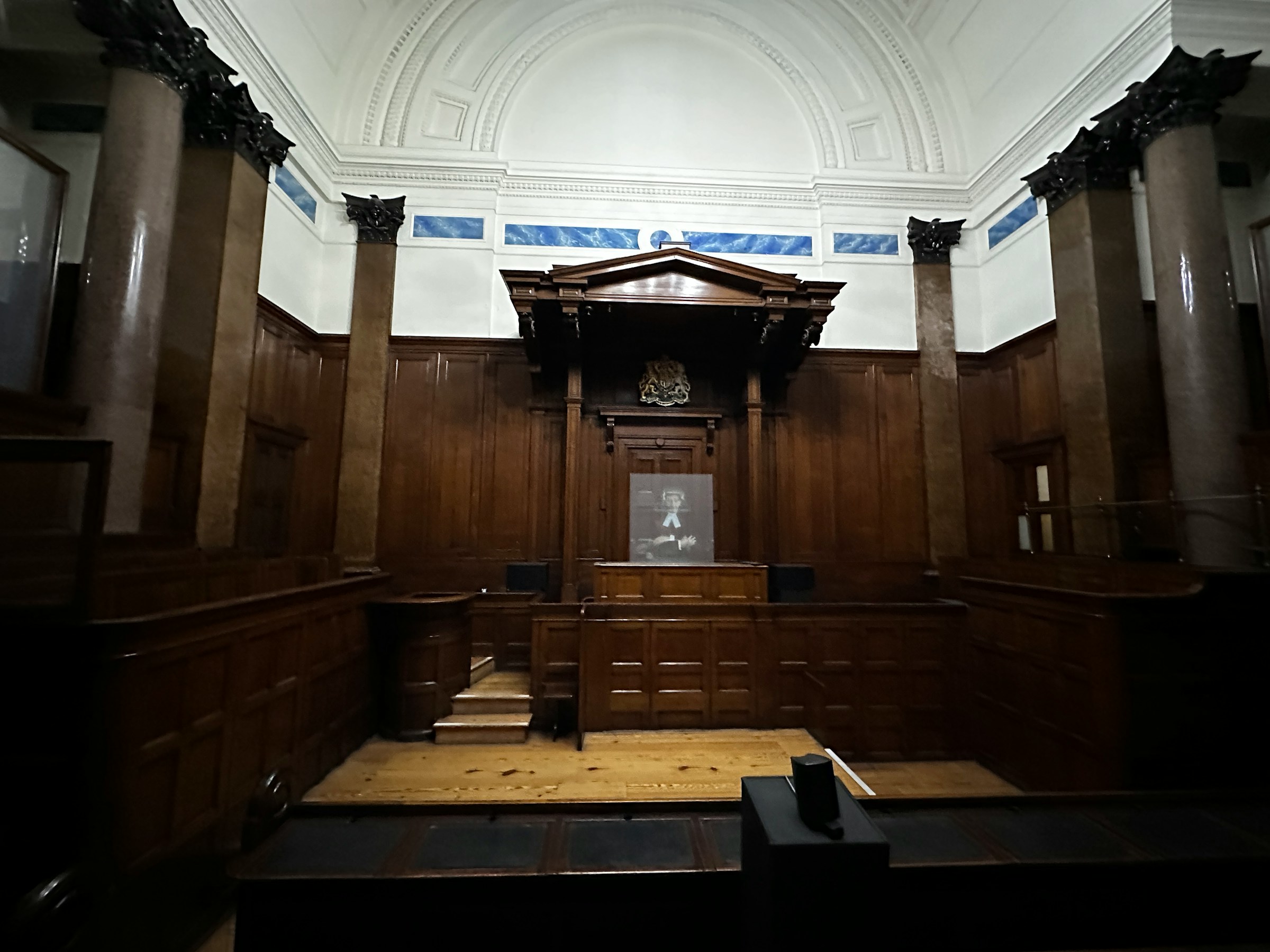
A bench warrant is the court's quiet emergency. It doesn't come with a knock on the door, a patrol car in the driveway, or a phone call. It sits in a database waiting for you to renew a driver's license, get pulled over for a brake light, or apply for a job that runs a background check. That's the moment it stops being a filing and starts being a problem.
If you're reading this because you just found out you have one, the short version is this: how to clear a bench warrant without going to jail usually comes down to a single document filed with the issuing court. It's called a motion to recall, and it's been in the rulebook for decades.
What follows walks through the motion itself, what an attorney does that most people can't do alone, what this actually costs, and the mistakes that turn a fifteen-minute recall hearing into a three-day weekend in county intake.
Why a Bench Warrant Gets Issued (And Why It Isn't an Arrest Warrant)
A bench warrant lives somewhere between a parking ticket and a pair of handcuffs. A judge signs one from the bench, usually after you miss a court date, miss a payment, fail a drug test, or blow off a probation condition. The word "bench" is literal. The judge reaches for it the moment you're not there to reach back.
What makes a bench warrant different from an arrest warrant matters here, and it's the reason most of these can be unwound without a cell. An arrest warrant accuses you of a new crime and usually follows a grand jury, an affidavit from a detective, and a finding of probable cause under the Fourth Amendment. A bench warrant accuses you of not showing up. The Administrative Office of the U.S. Courts describes a bench warrant in its official glossary as an order "used to arrest someone who has been held in contempt, has been indicted, or has refused to appear in court as required."
The practical difference: on an arrest warrant, a judge has concluded you probably committed a crime. On a bench warrant, a judge has concluded you were rude to the court.
Rude has consequences. A bench warrant is active 24/7. Your name sits in the FBI's National Crime Information Center database that every patrol car in the country queries on a traffic stop. The warrant will show up on a background check. It can surface at TSA screening. It can block a passport renewal under 22 U.S.C. § 2714a if the underlying charge is a felony drug trafficking allegation. It can void a concealed carry permit. Colorado's official court guidance tells you bluntly that once a warrant is issued, an arrest becomes a matter of time.
What Happens If You Do Nothing
Let me say this clearly so no one has to wonder: a bench warrant doesn't expire.
I've watched clients discover bench warrants from the early 2000s. One was served at immigration in Heathrow on a flight from Dallas to London. One surfaced during a standard mortgage refinance when the credit pull triggered a county records check. A bench warrant issued by a Florida misdemeanor judge in 2003 was still pinging every government database twenty-one years later.
There's no statute of limitations on the warrant itself. The underlying charge sometimes carries one. Contempt of court, which is what the warrant actually punishes, rarely does.
What you can expect if you wait:
- A routine traffic stop becomes a jail booking. Arrest, transport, a bail hearing that might not happen until Monday.
- Bond on a bench warrant pickup is usually higher than the original bail would have been. Judges read "failure to appear" as flight risk.
- Some states will hold you no-bond until you see a judge, particularly if the original case was a felony. California Penal Code § 1269c gives the arresting county this discretion.
- Interstate extradition is real. A California bench warrant can land you in a Tennessee holding cell, and Tennessee can legally hold you up to 90 days while California decides whether to come get you, under the Uniform Criminal Extradition Act adopted by 48 states.
The longer the warrant sits, the worse the math gets.
The Motion to Recall: The Single Document That Usually Fixes This
This is the actual tool. Every state has some version of it. In California it's a motion to recall the warrant under Penal Code § 978.5. In Texas it's a motion to lift under Code of Criminal Procedure Chapter 23. Florida uses a motion to quash under Rule 3.130 of the Florida Rules of Criminal Procedure. New York addresses it through CPL 530.70. The filing name changes state to state. The function doesn't.
What the motion asks the court to do is quash or recall the warrant, usually without taking the defendant into custody. It's two or three pages. It tells the judge why you missed, what's changed, and why recalling the warrant now serves the public interest better than waiting for a police pickup.
The motion works best when it's filed with three pieces of support:
- A sworn declaration explaining the missed appearance. Hospital records, a death certificate, deployment orders, or a statement about never getting notice of the original date.
- Proof of current life stability. Pay stubs, a lease, probation check-ins if applicable, proof that the defendant stayed in the jurisdiction.
- A proposed new court date. Not a request for dismissal. A request to restart.
A motion filed by an attorney is usually scheduled for an in-person appearance where the defendant does walk into the courthouse. What's different from getting picked up is the choreography. You arrive with counsel. The clerk has your file pulled. The judge considers the motion, recalls the warrant, sets a new appearance, and you walk out. In most California and Texas counties where these get filed, the entire hearing takes under fifteen minutes.
What Attorneys Do That You Can't Do Alone
People call the clerk. This is the single most common way a bench warrant becomes an arrest.
The clerk is not your friend, not your enemy, and not your lawyer. A clerk answers the phone by pulling up your case in the court management system. If there's an active warrant, the clerk is legally obligated in many jurisdictions to tell the bailiff sitting ten feet away. Some counties log the phone number the call came in on. A few, including jurisdictions in Harris County, Texas and Clark County, Nevada, will dispatch a unit to an address pulled from that call.
An attorney does several things a pro se defendant can't.
Appearance without custody. In most states a lawyer can make a "special appearance" to argue the recall motion without the defendant physically being present at first. The attorney shows up, files the paperwork, argues the motion, and leaves with a new court date. California Penal Code § 977 permits this for misdemeanors outright and for many felonies with a written waiver.
Pre-filing conversation with the prosecutor. Before filing, a competent defense attorney calls the assistant district attorney or city prosecutor handling the case. The conversation usually goes: my client wants to clear the warrant, here's what we're proposing, will you agree to the recall with a new date or are you going to ask the judge to remand? A DA who agrees in advance removes almost all risk from the hearing.
Surrender arrangements. For cases where the warrant can't be recalled and a surrender is required, an attorney can arrange what's called a walkthrough. The defendant arrives at a specific time, is processed, posted on an already-set bond, and released the same day. Without this arrangement, the same surrender can mean 48 hours in intake before anyone sees a judge.
Cleaning up the failure-to-appear on the back end. If the original charge was minor and the warrant gets cleared cleanly, many states allow the failure-to-appear itself to be sealed or expunged later. California Penal Code § 1203.4 and Texas Government Code Chapter 411 handle these respectively. Missing a single date can trigger the difference between a record that clears and one that doesn't.
What It Actually Costs to Clear a Bench Warrant
The cost question breaks into three buckets. The real question most people are asking isn't "how do I get a free lawyer" but "am I going to have to sell something to fix this."
The motion filing itself. Most state courts don't charge a filing fee for a motion to recall a bench warrant in a criminal case. Civil court warrants in child support or small claims enforcement sometimes do. When there is a fee, it's usually under $75.
The new bail. If the warrant was issued in a case that never got to resolution, the judge may reset bail at the recall hearing. In felony cases the number can climb. In misdemeanor cases the court sometimes releases on own recognizance, meaning no bond at all. The ABA Criminal Justice Standards on Pretrial Release recommend OR release for defendants not posing a flight or public safety risk, and many state courts follow that guidance on a recall.
The attorney. This is where the variance is brutal. A flat-fee recall motion in a single-charge misdemeanor case in a reasonable jurisdiction runs $500 to $1,500. The same motion in a multi-count felony with an out-of-state defendant and a prosecutor who wants to fight the recall can run $3,000 to $7,500. Public defenders handle recall motions when the case qualifies, but you have to be formally reappointed in most jurisdictions, which means the warrant gets recalled at the same hearing where a new public defender is assigned. Readers who want a similar cost breakdown for another type of legal filing can see how attorney rates behave under real jurisdictional variance.
Bail bondsmen are a separate category, and they're not lawyers. A bondsman can post the bond the judge sets at the recall hearing but can't file a motion. Some counties license "bench warrant service" providers who'll drive the paperwork to the courthouse for a flat fee, usually $150 to $400. These matter in rural counties where the clerk's office closes at 3 p.m.
The recall clears the warrant, not the case. Whatever you missed a date for is still waiting.
When You Can (and Can't) Appear Without Being Arrested
Not every jurisdiction lets you walk in. A few rules let you plan.
Warrant held, not served. Some counties distinguish between a warrant issued and a warrant "held." A held warrant gives you a grace window, usually 30 days, to appear voluntarily without a pickup. Los Angeles County Superior Court issues held warrants on most misdemeanor failures to appear. San Diego does not.
Self-surrender calendars. Many criminal courts set a daily or weekly self-surrender calendar. Defendants with active warrants can walk in, be recognized by the court, and have the warrant recalled on the spot if the facts support it. Harris County, Texas holds daily self-surrender at the county criminal courts building at 1201 Franklin Street.
Remote recall hearings. The post-2020 change worth knowing about. Several states now allow remote appearance on low-level bench warrants. Florida's Fourth Judicial Circuit permits Zoom hearings on misdemeanor bench warrants under its administrative orders. Arizona's Supreme Court adopted a similar rule in late 2023. Check the local administrative order before assuming.
Private surrender between states. If the warrant is in State A and you're in State B, some state attorneys general will accept a surrender through a local sheriff with an agreement not to extradite. This happens more often than people realize on lower-level warrants where the original state doesn't want to pay to transport.
The single unifying rule: none of this works if you show up cold. Every option above requires paperwork filed in advance. The general rhythm of walking into a courthouse and watching a judge decide a contested motion holds up whether you're the one filing or the one responding.
The Five Mistakes That Turn a Recall Into a Jail Stay
Every criminal defense attorney who handles recall motions has seen these.
1. Driving yourself to the courthouse. Most courthouses have a sheriff's deputy running plates in the parking lot. A hit on the warrant means arrest before you get to the door. Take a rideshare.
2. Calling the clerk to ask about the warrant. Already covered above. The clerk answers honestly.
3. Showing up on the wrong day. A recall motion has to be calendared. Walking in without a scheduled hearing puts you at the mercy of whichever judge is sitting, and judges sitting on random days don't have your paperwork.
4. Bringing large amounts of cash. If the judge sets bail and the bond has to be posted, the clerk will accept cashier's checks or a bondsman's surety. Arriving with $10,000 cash triggers a federal Currency Transaction Report under 31 U.S.C. § 5331 and in some counties draws a hold for investigation.
5. Trying to handle an out-of-state warrant without local counsel. Extradition waivers signed in the wrong state at the wrong time have put people in custody for weeks. A motion signed by an out-of-state attorney not admitted pro hac vice has no legal effect in the issuing court.
The First 48 Hours After You Find Out
The playbook when you discover a bench warrant today.
Pull the underlying case file. Every state allows a person to request their own criminal record. The FBI maintains instructions for requesting an Identity History Summary Check. State records are usually through the state police or the state attorney general's office.
Identify the court. You need the court name, the judge, the case number, and the original charge. That set of facts drives every strategic decision that follows.
Stop talking about the case to anyone who isn't your lawyer. Texts, voicemails, Facebook comments, and jailhouse phone calls are all discoverable. In 2024, a Michigan appellate court upheld the admission of a defendant's Reddit comments about his pending case as substantive evidence against him. That pattern has become routine. One tenant's experience with a missed hearing shows how quickly procedural default can change the shape of an entire case, even when the underlying facts are on your side.
Retain counsel before you do anything else. If private counsel is out of reach, request a public defender application even before the warrant is recalled. In California, Penal Code § 987 gives a right to counsel at the first appearance, and "first appearance" includes the recall hearing.
A decent criminal defense attorney will, within 48 hours of being retained, have pulled the case file, called the prosecutor, identified whether the warrant is held or active, and filed a recall motion if one is permitted. If the lawyer tells you to come in next week, find a different lawyer.
Frequently Asked Questions
Can I just turn myself in to clear a bench warrant?
Yes, and in some counties that's the right answer, but only after an attorney has arranged the terms. A walkthrough surrender scheduled with the prosecutor means you arrive at a set time, are booked, get your bond posted by a pre-arranged bondsman, and walk out the same day. An unannounced surrender can mean 48 hours in intake waiting for a judge. Both are legal. Only one preserves a day.
How long do you stay in jail for a bench warrant?
It depends on the underlying case. On a misdemeanor bench warrant, the average time from arrest to arraignment is 24 to 48 hours, at which point a judge usually sets bond or releases on own recognizance. On a felony bench warrant, the hold can run three to five days before the first appearance, and in states with a "no-bond" provision on bench warrant pickups, a defendant can stay in custody until the full hearing on the original charge. Federal pretrial detention under 18 U.S.C. § 3142 carries no automatic release window.
Does a bench warrant ever go away on its own?
No. A bench warrant doesn't expire. The Uniform Criminal Extradition Act, adopted in 48 states, allows bench warrants to be served decades after they were issued. If the underlying charge is past its statute of limitations the case may be dismissed after the warrant is recalled, but the warrant itself sits in the NCIC database until a judge signs an order recalling or quashing it. Death of the defendant is the only other way a warrant closes automatically.
How much does a lawyer charge to recall a bench warrant?
A flat-fee recall motion in a single-charge misdemeanor case typically runs $500 to $1,500 in a standard jurisdiction. Felony cases, out-of-state warrants, and cases where the prosecutor opposes the recall run $3,000 to $7,500. Public defenders handle recall motions at no cost to defendants who qualify financially, though the appointment is usually made at the same hearing where the warrant is recalled.
Will a bench warrant show up on a background check?
Yes, in almost all cases. Commercial background checks pull from court records and from the NCIC and Interstate Identification Index databases, all of which show active bench warrants. Employment background checks governed by the Fair Credit Reporting Act can report pending warrants indefinitely, though the underlying charge is limited to seven years for jobs under $75,000 in annual salary under 15 U.S.C. § 1681c.
What's the difference between quash and recall on a bench warrant?
Quash and recall are used interchangeably in most state courts, but some jurisdictions distinguish them. A recalled warrant is withdrawn by the judge who issued it, usually because the defendant has appeared or the reason for the warrant has been resolved. A quashed warrant is declared invalid, often because it was issued in error, without proper notice, or based on incorrect facts. Either outcome clears the warrant from law enforcement databases, but a quashed warrant provides a stronger defense against future arrest than a recalled one.
This article is for informational purposes only and does not constitute legal advice. Bench warrant procedures vary by state and by court. Anyone with an active bench warrant should consult a licensed criminal defense attorney in the jurisdiction that issued the warrant before taking any action.