A Squatter Moved Into Her Rental. The Eviction Took 14 Months and $80,000.
A Baltimore landlord named Jennifer drove past her vacant rental about a week after the legitimate tenant moved out. Lights on inside. People she didn't recognize on the porch. By the time she got off the phone with the police, she'd learned the part of property law nobody tells you when you buy a rental: the people inside her house had more procedural protection than she did.
The story showed up in early 2025 in a landlord-association write-up that's been circulating in the property-management subreddits ever since. A homeowner who'd just turned a tenant over found strangers living in the house within seven days. They claimed they were tenants, refused to leave, hired a lawyer, and turned what should have been a thirty-day re-rent into the kind of saga that ends careers.
"They refused to leave, claiming they had 'tenant rights' under Maryland law and were entitled to legal protections afforded to tenants. The eviction process, which should have taken weeks, dragged on for over a year."
— via the American Association of Landlords account of the Baltimore case
Fourteen months. That's how long the squatters stayed. The cost ledger from the same writeup is the part that should be printed and stapled to every property purchase agreement in the country:
"Unpaid rent (14+ months): $21,000. Legal fees: $8,500. Property damage repairs: $35,000+. Lost rental income: $9,000. Utilities/property taxes: $4,200. Total: nearly $80,000."
— via AAOL
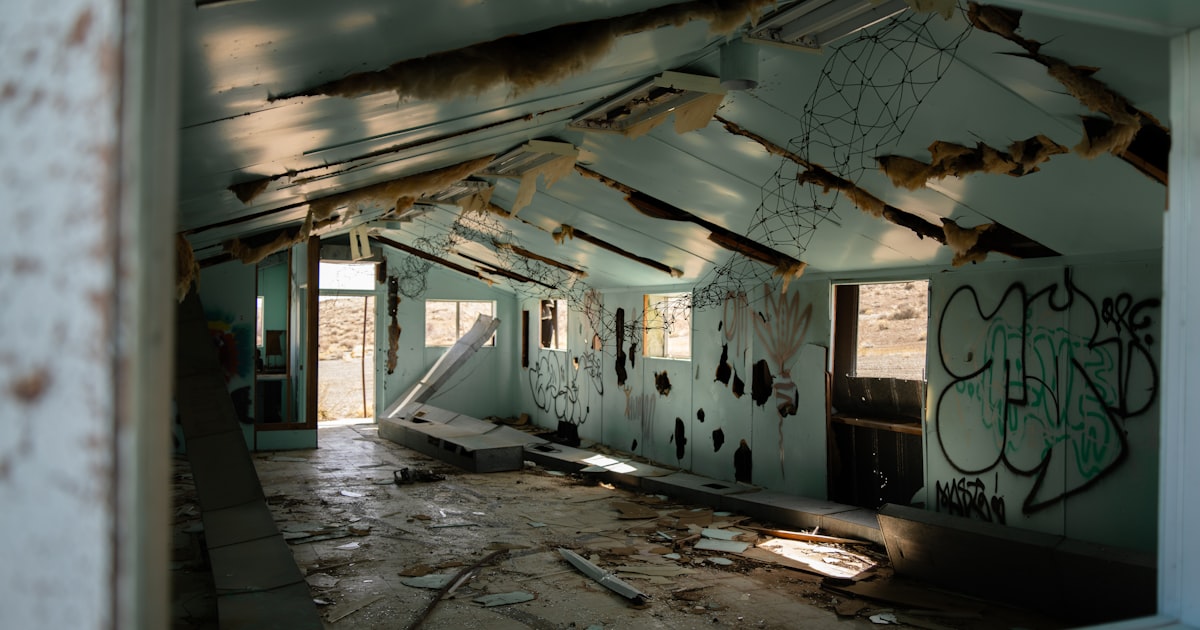
The damage description gets worse from there. Toilets ripped out and removed. Holes punched through drywall. Flooring stained, torn, and partially removed. Appliances gone. Biohazard cleanup needed in multiple rooms. Jennifer spent more in repairs than the squatters would have paid in two years of full rent.
And here's the part that made me close the tab and go check the locks on my rental house in Norfolk: the squatters did everything by the book. Their lawyer filed motions. Requested extensions. Cited Maryland tenant protection statutes. Used every procedural lever the system gives an actual tenant, because the system, in most states, gives a person who's physically inside a property the same procedural protection as a legitimate tenant for the purposes of eviction.
It's not just Baltimore
If Jennifer's story were a one-off it would be a freak. It isn't a one-off. Reader's Digest pulled together multiple verified squatter cases from across the country last year, and the pattern is the same in different cities.
A Salt Lake City couple opened the door of their own apartment to find a woman wearing one of their kids' shirts watching their TV.
"There's someone in our home!"
— Jaime Gonzales, Salt Lake City, via Reader's Digest
The squatter was there about a week before they got her out. She made off with kitchenware, baby clothes, and an engagement ring. Estimated loss around $13,000.
A Colorado Springs family let a homeless woman crash for a couple of nights as a favor. She showed up later with her boyfriend and her teenage son, started growing magic mushrooms in the living room, and informed the family they couldn't make her leave.
"You can't make me leave."
— squatter to William Towns's family, Colorado Springs, via Reader's Digest
The police told the Towns family it was a "civil matter" requiring a court order, even though the trespasser had originally entered with permission. The family ended up paying close to $6,000 in legal fees and security upgrades before they got her out, and only got her out by pursuing elder abuse charges, because the original agreement to let her stay had come from an elderly relative.
And then there's the New York City case that went viral last year, where a Queens homeowner named Adele Andaloro was arrested for changing the locks on her own house after a squatter claimed he had a lease. She had to spend a month getting the criminal charges dropped and the squatter charged before she could finally re-enter. Most major outlets covered it; the basic timeline is laid out in the New York Post's coverage. The squatter inside the house had more procedural rights than the woman who owned it.
So how does this happen, legally
This is the part most landlords get wrong before it happens. There are three distinct legal categories of someone occupying property they don't own, and which one your situation falls into changes everything.
A trespasser is someone who entered without permission and has no claim of right. Police can typically remove them without a court order, the same way they'd remove a stranger from your bedroom at 2 a.m. The catch is that trespasser status usually requires an obvious break-in, no time elapsed, and no claim of tenancy. Once the person inside the property says "I have a lease" or "I've been living here for weeks," police in most jurisdictions back off and tell you to file in housing court, even if the lease is fake.
A squatter is someone occupying property without permission but who has been there long enough or in such a way that police treat the matter as a civil dispute requiring a court process. Squatters can be evicted, but only through the formal process the state uses for tenants: serve notice, file a complaint, get a court date, win a judgment, get a warrant of restitution, schedule the sheriff. That timeline is months in most states. In jurisdictions with backed-up courts, it's a year or more.
An adverse possessor is someone who has occupied property openly, continuously, exclusively, and without the owner's permission for the statutory period (usually 5 to 21 years depending on the state). After that period, they may be able to file a quiet-title action and actually take legal ownership of the property. This almost never applies in the modern landlord context, but it's the legal doctrine people are loosely referring to when they say "squatter's rights." The Cornell Legal Information Institute summary walks through the elements.
In Jennifer's Baltimore case, the squatters used Maryland's protective tenant procedures by claiming they had a lease (they didn't) and forcing her to prove the negative through the formal eviction process. In the NYC case, Andaloro tried to short-circuit the process by changing the locks, and ended up arrested under New York's Real Property Actions and Proceedings Law § 853, which makes self-help eviction a criminal offense in most circumstances.
The expert response: what landlords can and can't do
This is the section where Laura, the writer, has to channel every property attorney she's ever talked to and tell you what's actually safe versus what feels safe. They are not the same.
You cannot change the locks while someone is inside the property without a court order. You cannot shut off utilities. You cannot remove their belongings to the curb. You cannot threaten them or hire someone else to threaten them. You cannot file a false police report claiming they broke in if they didn't. Every one of those moves is illegal in most states, and several of them are crimes that get the property owner arrested instead of the squatter. The Andaloro case in Queens is the textbook example of what happens when an owner does the thing every cell in their body is telling them to do.
What you can do is start the legal eviction process the same day you discover the situation. The exact name varies by state (unlawful detainer, summary process, forcible entry and detainer, ejectment, holdover proceeding) but the structure is roughly the same: written notice, complaint filed, service of process, hearing date, judgment, writ of possession, sheriff or marshal executing the writ. Some states allow expedited proceedings for squatters who have no plausible claim of tenancy. Many do not.
If the squatter is producing a fake lease or claiming a verbal agreement, the burden often falls on the property owner to prove no such agreement exists. That's where documentation from your end becomes the case. Lease history showing your actual tenant. Utility bills. Property tax receipts. Communications with the previous legitimate tenant. Recorded interactions, where state law allows. If you can document that the property was vacant on a specific date and the squatters appeared after that date, you have a much faster path through summary proceedings.
Prevention: what every landlord should be doing now
Most squatter situations start with a vacant property. The window between one tenant moving out and the next moving in is when the risk concentrates. Two weeks of empty house in a residential neighborhood is enough.
If you own rentals, get a smart lock on the door before the next tenant turnover. Get a doorbell camera. Have someone (a property manager, a neighbor you pay $20 a week, your own kid driving by) physically check the property at least every couple of days during any vacancy. Mail piling up, lights on at night, an unfamiliar car in the driveway are all early signs.
For inherited properties or out-of-state holdings, the risk profile is worse, because the property may sit unattended for months before anyone notices. Andaloro's case involved a Queens home she had inherited from her late mother. The squatter moved in during the gap between probate and her assumption of active management. LawInfo's overview of squatter prevention covers the core moves: physical security, regular inspections, clear no-trespassing signage, and immediate action at the first sign of unauthorized entry.
Some states have begun tightening the rules in response to high-profile cases. Florida passed HB 621 in 2024 creating a fast-track removal process for unlawful occupants. Georgia did similar with the Georgia Squatter Reform Act. New York debated but did not pass major changes after the Andaloro case. Most states still treat the situation as a civil matter requiring formal eviction.
If your state has enacted a fast-track law, get familiar with the specific procedural requirements. They often require an affidavit, a sheriff's investigation, and a short notice period before removal. They do not eliminate due process; they compress it.
If you discover squatters today
Call the police first, even though they may tell you it's a civil matter. You want a police report on file documenting the date you discovered the unauthorized occupancy. That report becomes evidence later about how long the occupants have been in the property, which matters for procedural posture and for any criminal charges that get filed later for vandalism, theft, or burglary.
Photograph and document everything from outside the property. Don't enter if the squatters are inside. Document what's visible from the curb, who's there, what vehicles are present, and what time you observed it.
Contact a real estate or landlord-tenant attorney the same day. Most will give you a fast intake call to identify which procedural track to use and what notice has to go out first. The cost of the consultation is going to be the cheapest part of the next twelve months. Most landlords who tried to handle the eviction themselves in the cases above made mistakes that extended the timeline, or in the Andaloro situation, made it dramatically worse.
Notify your insurance carrier. Some landlord policies cover loss of rent and certain property damage during illegal occupancy; others don't. Knowing what's covered shapes how much risk you can absorb during the eviction window.
And do not, under any circumstance, take physical action yourself. Don't change locks while they're inside. Don't show up with friends. Don't disconnect utilities. Don't remove their property. Every emotionally satisfying move in this situation is the move that turns the squatter into a plaintiff and the owner into a defendant. The law gives you a process. It is slow. It is the only one that works.
Frequently asked questions
Can I just call the police to remove a squatter?
Sometimes, but usually not. If the person clearly broke in moments ago and is still on the property, police may treat it as criminal trespass and remove them. Once the person inside claims any form of tenancy (a lease, a verbal agreement, prior permission), most jurisdictions treat the matter as a civil dispute requiring a formal eviction process through housing or county court, even if the claim of tenancy is fraudulent. The owner has to prove the negative through the court process.
How long does it take to evict a squatter?
It depends on the state and the local court backlog. Most formal eviction processes take 30 to 90 days from the initial notice if the squatter doesn't contest. Contested cases routinely take 6 months to a year, and in busy jurisdictions with squatters who hire counsel and file motions, 12 to 18 months is realistic. Florida and Georgia have enacted fast-track removal procedures that can compress timelines considerably for properties that meet the statutory criteria.
Can I change the locks to keep a squatter out?
No, not while they are physically inside the property. Self-help eviction (changing locks, removing belongings, shutting off utilities) is illegal in nearly every state and frequently constitutes a criminal offense. New York's RPAPL § 853 and similar statutes in other states create civil and criminal liability for owners who try to short-circuit the process. The Adele Andaloro case in Queens is a recent example of a property owner being arrested for doing exactly this.
What is adverse possession and does my squatter have it?
Adverse possession is a legal doctrine that, after a long period of open, continuous, exclusive, and hostile occupation of property (usually 5 to 21 years depending on the state), allows the occupier to claim legal ownership through a quiet title action. Most modern squatter situations do not come close to triggering adverse possession because the time window is far too short. The phrase "squatter's rights" colloquially refers to procedural protections during eviction, not to actual ownership claims.
Will my landlord insurance cover damage from squatters?
It depends on your specific policy. Some landlord policies cover vandalism and certain property damage even when the property is unoccupied or occupied by an unauthorized party; others exclude losses during periods of vacancy or require specific endorsements. Contact your carrier in writing as soon as you discover the situation. Lost rental income coverage is less commonly included but available as an add-on with many carriers.
How do I prevent squatters in a vacant rental?
Physical security is the first line: smart locks, doorbell cameras, motion-activated exterior lighting, and visible no-trespassing signage. Have a person physically check the property at least every few days during any vacancy. Don't leave keys in lockboxes longer than necessary. Forward mail or have a tenant immediately on hand. Avoid leaving notice that the property is vacant on listing sites longer than needed. Inherited or out-of-state properties carry the highest risk and benefit most from a local property manager.