Marriage-Based Green Card Interview: What Reddit Couples Got Asked (and What Tripped Them Up)
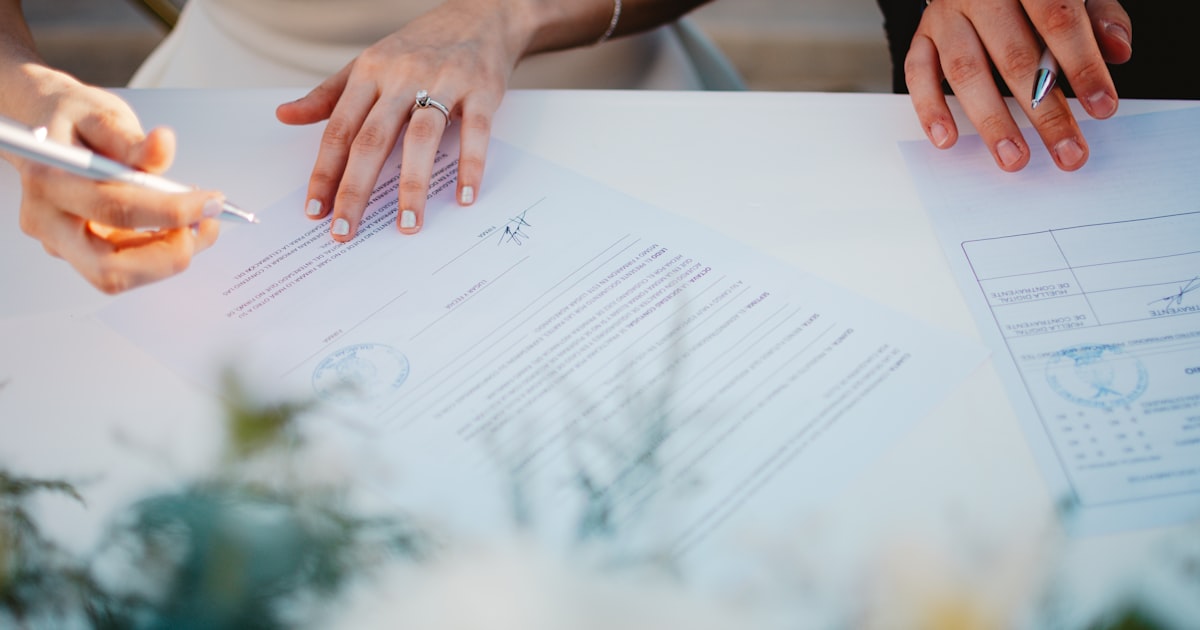
If you spend a Saturday afternoon scrolling r/immigration or r/USCIS, you'll find dozens of post-interview reports that follow the same arc. The couple shows up nervous, gets asked questions about how they met, where they keep the toothbrushes, what side of the bed each of them sleeps on, and walks out 15 to 90 minutes later either approved on the spot, given a "we'll mail you a decision," or pulled into something they didn't expect — a Stokes interview, a Request for Evidence, or in rare cases a fraud referral. The interview itself is usually less dramatic than the anxiety leading up to it. The preparation that keeps it that way is what this guide is about.
The patterns described below come from de-identified themes that recur across r/USCIS marriage-interview threads, r/immigration marriage-based green card threads, and r/Ask_Lawyers. No individual posters are identified; the legal mechanics are sourced from USCIS official guidance and the underlying statutes.
What the marriage-based green card interview actually is
The marriage-based green card interview is the in-person USCIS adjudication of two filings: Form I-130 (Petition for Alien Relative, filed by the U.S. citizen or lawful permanent resident spouse) and Form I-485 (Application to Register Permanent Residence or Adjust Status, filed by the foreign-national spouse). The legal authority is the Immigration and Nationality Act § 216 for conditional residence and INA § 245 for adjustment of status. The interview is the moment USCIS confirms the marriage is "bona fide" — entered into in good faith, not for the purpose of obtaining immigration benefits — and that all other adjustment requirements are met.
The interview takes place at the USCIS field office covering the foreign-national spouse's residential address. Both spouses are required to attend together. The officer's job is to evaluate the marriage holistically — the documentary evidence, the couple's testimony about their relationship, and the consistency between the two. The standard the officer applies is whether, on the totality of the evidence, the marriage was entered into in good faith.
The questions Reddit couples consistently report being asked
The interview question pool is not random. USCIS officers work from established lines of inquiry designed to test whether two people actually live as a married couple. The consistent patterns from r/USCIS interview-question threads:
How you met
- Where did you first meet?
- What was the date?
- Who introduced you?
- What was your first impression?
- How long before you started dating?
- What was your first date — where, when, what did you do?
The proposal and wedding
- Who proposed? Where? When?
- Did you have a ring? Who picked it out?
- Did anyone else know in advance?
- Where did you get married? Who attended?
- Did you have a reception? Honeymoon?
- How was the ceremony arranged?
Daily life and household
- What's your current address? When did you move in together?
- Who handles which bills?
- Do you have joint bank accounts? Joint credit cards?
- Whose name is on the lease or mortgage?
- What does each of you do for work? What are your work schedules?
- What time does each of you go to bed and wake up?
- Who cooks? Who cleans? Who does laundry?
- Where do you shop for groceries?
The very specific household details
The detail-checking questions Reddit users describe most often:
- What color is your bedroom? Bedroom furniture?
- What side of the bed do each of you sleep on?
- How many TVs are in your home? Where are they?
- What did you have for dinner last night?
- What time does your spouse usually leave for work?
- What's the make/model/color of each of your cars?
- Do you have pets? What are their names?
The reasoning: couples who actually live together can answer these from memory effortlessly. Couples who don't live together typically can't.
Family and social
- What are your spouse's parents' names? Where do they live?
- Have you met them? When?
- What about siblings — names, ages, where they live?
- What's your spouse's birthday? What did you do for the last one?
- What did you do for the last major holiday together?
- Do you have any close friends in common?
What documents to bring (and what officers actually look at)
USCIS sends an interview notice listing required documents. Bring originals plus copies of everything. The standard documentary "bona fide marriage" evidence package, drawn from the USCIS Policy Manual on adjustment of status interviews:
- Joint financial documents: joint bank statements (six months minimum), joint credit card statements, joint car insurance policy with both names, joint health insurance policy
- Joint housing documents: lease or mortgage with both names, utility bills (gas, electric, water, internet) addressed to both spouses
- Tax documents: joint tax returns for any married years, W-2s and 1099s if jointly filed
- Photographs: photos together over time — not just wedding day, but ordinary photos with friends and family across multiple years and locations
- Travel documents: joint hotel bookings, joint flight reservations, photos from trips together
- Beneficiary designations: retirement account beneficiaries, life insurance beneficiaries, will provisions naming the spouse
- Children's documentation: if applicable, birth certificates of any children of the marriage
- Affidavits: sworn statements from family and friends attesting to the bona fide nature of the relationship
- Communication records: if the relationship has any long-distance or pre-marriage period, text logs, video call records, mailed cards/letters
The officer will not look at every page of every document. They are looking for consistency — that the documents corroborate each other, that the addresses match the testimony, that the joint accounts have actual activity rather than being newly opened with token deposits. r/USCIS document-bring threads consistently report that the officer flips through the binder, picks 2-3 items at random, and verifies them against the testimony.
The Stokes Interview: when separate questioning happens
The "Stokes interview" — named after the federal class action Stokes v. INS, 393 F. Supp. 24 (S.D.N.Y. 1975) — is the procedure USCIS uses when the standard joint interview raises fraud concerns. The spouses are separated and asked the same set of questions independently. The answers are compared. Significant inconsistencies become evidence of marriage fraud.
Stokes interviews are the source of significant Reddit anxiety because they sound terrifying. In practice they happen in a small minority of marriage-based cases — typically those with red flags during the joint interview, prior fraud indicators, large age gaps with limited prior relationship history, recent immigration enforcement encounters, or filings where the couple's testimony in the joint interview was visibly inconsistent.
Couples who genuinely know each other almost always survive a Stokes interview without issue. The questions are the same — "what side of the bed do you sleep on, what did you have for dinner last night, what's your mother-in-law's name" — but answered separately. Inconsistencies on trivia ("we had pasta" vs "we had spaghetti") are not disqualifying. Inconsistencies on substance — different dates of meeting, different stories about the proposal, different addresses, different family information — are.
Red flags that trigger Stokes or RFE
Reddit case reports consistently identify the same fact patterns that escalate cases:
- Marriage shortly after immigration enforcement encounter. A foreign national who got married within weeks of receiving an NTA, denial, or deportation notice will face heightened scrutiny.
- Large age gap with limited prior relationship. An age gap alone is not disqualifying, but combined with a short courtship and limited shared history, it draws attention.
- Significant cultural or language barriers without explanation. If the couple cannot communicate fluently in any common language, the officer may question how the relationship developed.
- One spouse has prior marriages to foreign nationals. Patterns of multiple immigration-related marriages by the U.S. citizen spouse are a major red flag.
- Inconsistent answers between the two spouses during the joint interview. Even minor inconsistencies that the couple can't reconcile in real time can trigger separation.
- Documents that don't corroborate the testimony. Joint bank account opened the day before the interview. Lease in only one name despite testimony of two-year cohabitation. Photos that all look like they were taken on the same day.
- Anonymous tips or social media findings. USCIS does sometimes act on third-party reports of marriage fraud or on social media inconsistencies (separate residences listed publicly, dating-app activity post-marriage).
What goes wrong: the most common Reddit interview failures
- Spouses contradict each other on basics. Different dates of meeting. Different stories about the proposal. Different addresses for the marital home. Different names for the wedding venue.
- Joint financial commingling is too thin. The "joint" account has $50 in it and shows two transactions. Joint credit card was opened a month ago and has only the spouse's purchases on it.
- Lease shows only one name and the testimony claims they live together. If the foreign-national spouse can't explain why their name isn't on the lease ("we just hadn't gotten around to updating it"), the inconsistency hurts.
- One spouse can't answer basic questions about the other. Doesn't know parents' names, doesn't know what the spouse does for work, can't describe the home accurately.
- The couple's social media tells a different story. Posts indicating separate residences, separate vacations without explanation, ongoing dating-app profiles, photos with the wedding ring conspicuously absent.
- Translator issues. The foreign-national spouse needs a translator but the marriage was supposedly conducted in English. The disconnect raises bona fide concerns.
Practical preparation tips that come up repeatedly
- Practice the timeline together. Sit down a week or two before the interview and talk through how you met, when you started dating, the proposal, the wedding. Not to memorize a script — to be sure you actually agree on the dates and details.
- Prepare a documentary binder organized by category. Joint financial, joint housing, photos, tax returns, affidavits. Each section labeled and tabbed. Officers respond well to organization; it's a non-verbal indicator that the couple takes the relationship seriously.
- Bring originals plus two complete copies. One for the officer to keep, one for your file, one for the foreign-national spouse to retain.
- Discuss the embarrassing topics in advance. If there are things in the relationship you'd rather not discuss (a prior engagement that ended, a complicated family dynamic, a religious or political disagreement), figure out how you'll handle them so neither spouse is caught off guard.
- Bring an attorney if you can. Attorneys are not always present at the interview, but having one available — at minimum prepared to attend if requested — is worth the investment for any case with red flags. Standard fee for marriage-based green card representation is $2,500 to $5,000 covering the full filing through interview.
- Dress professionally. Business casual at minimum. The interview is a federal proceeding; treat it that way.
- Arrive 30 minutes early. USCIS field offices have security screening that can take 15-20 minutes during peak hours. Late arrivals are not always rescheduled.
- Be calm. Be honest. Don't volunteer. Answer the questions asked. Don't expand. Don't speculate. If you don't know an answer ("when did your mother-in-law's birthday last fall?"), say so honestly rather than guessing.
What happens after the interview
- Approval at interview. The officer says "I'm going to approve your case today." The card is mailed within a few weeks. Most well-prepared cases without red flags resolve this way.
- "We'll mail you a decision." The officer is reserving decision pending additional review. This is not necessarily bad — many cases approved this way after 30-60 days.
- Request for Evidence (RFE). The officer needs more documentation. Standard response window is 87 days under USCIS Policy Manual. Failure to respond results in denial.
- Notice of Intent to Deny (NOID). More serious than an RFE. The officer has identified specific concerns and is signaling that without strong rebuttal, denial is coming. Response time is typically 30 days. Hire counsel immediately if not already represented.
- Stokes interview rescheduled. The case is being escalated to separate questioning at a future date. Hire counsel if you do not already have one. Prepare extensively.
- Denial. The case is denied. Options include filing a motion to reopen/reconsider with USCIS, or — if the foreign-national spouse is now in removal proceedings — defending the case before the immigration court. Deadlines are short and unforgiving.
The bottom line
The marriage-based green card interview is the moment USCIS verifies what your filings have claimed: that the marriage is real. The vast majority of legitimate marriages survive the interview without serious issue. The cases that go badly almost always share the same patterns — inconsistent testimony, thin documentary commingling, social media contradicting the testimony, or fact patterns that trigger Stokes review. The preparation that prevents bad outcomes is universal: practice the timeline together, organize the documentary binder, bring an attorney for any case with complications, and answer the questions calmly and honestly. Most Reddit success stories conclude with "the officer approved us in 20 minutes" — and the couples who write those posts almost always describe the same preparation routine.
Frequently asked questions about marriage-based green card interviews
How long does the marriage-based green card interview take?
Most interviews run between 15 and 60 minutes. Straightforward cases with strong documentation often finish in 15 to 25 minutes. Cases with questions or red flags can run 45 to 90 minutes or be extended into a separate Stokes interview. Plan for the field office to keep you for at least two hours including security and waiting time.
What is a Stokes interview and how do I avoid one?
A Stokes interview is separate questioning of each spouse, used when USCIS has fraud concerns. They occur in a minority of cases — typically those with red flags such as recent immigration enforcement, large age gaps with limited shared history, prior immigration-related marriages, or visible inconsistencies during the joint interview. Avoid escalation by ensuring testimony and documents are consistent and by not making material misstatements about the relationship.
Should I hire an immigration attorney for the interview?
Strongly recommended for any case with complications: prior immigration violations, criminal history, large age gaps, language barriers, prior fraud indicators, or any unusual fact patterns. For a standard case with no red flags, an attorney is helpful but not strictly necessary. Most marriage-based green card representation runs $2,500 to $5,000 covering the full filing process.
What happens if we get a Request for Evidence after the interview?
An RFE means the officer needs additional documentation before deciding. The response window is typically 87 days. Common RFE topics include additional bona fide marriage evidence, more financial commingling proof, additional photographs across time periods, or sworn affidavits from family and friends. Responding completely and on time produces approval in most cases.
Will the officer approve us at the interview or will we get a decision later?
It varies. Some officers approve well-prepared cases on the spot at the end of the interview. Others say "we'll mail you a decision" even when the case is clearly approvable, simply as standard practice. Don't read too much into the on-the-spot vs. mailed-decision split — both routes lead to the same outcome in well-prepared cases.
Sources
- Reddit communities and search threads referenced: r/immigration; r/USCIS; r/Ask_Lawyers; r/USCIS search: "marriage interview"; r/USCIS search: "stokes interview"; r/USCIS search: "interview questions asked"; r/USCIS search: "interview documents bring"; r/immigration search: "marriage based green card interview"
- Federal statutes: INA § 216 (8 U.S.C. § 1186a) — conditional residence; INA § 245 (8 U.S.C. § 1255) — adjustment of status
- Case law: Stokes v. INS, 393 F. Supp. 24 (S.D.N.Y. 1975) — origin of the separated-spouse interview procedure
- USCIS official guidance: USCIS Policy Manual Volume 12, Part G, Chapter 2 (Adjustment of Status Interviews); USCIS Policy Manual Volume 1, Part E, Chapter 6 (Requests for Evidence); Form I-130 instructions; Form I-485 instructions
- Related TCL coverage: USCIS Case Is Stuck: Real Options That Actually Move Cases Forward; How Long Does It Take to Renew a Green Card?; All Immigration coverage
This article is general legal information about marriage-based green card interviews, not legal advice. Individual immigration cases turn on specific facts and current USCIS policy. The patterns described above reflect publicly available USCIS guidance, the underlying statutes, and de-identified themes that recur in the Reddit communities cited; no individual posters are named or quoted with identifying details. For advice on a specific case, consult a licensed immigration attorney in your jurisdiction. The Complete Lawyer is an independent publisher and has no affiliation with USCIS or any government agency.