Living Will vs. Will: The Crucial Difference Most People Don't Know
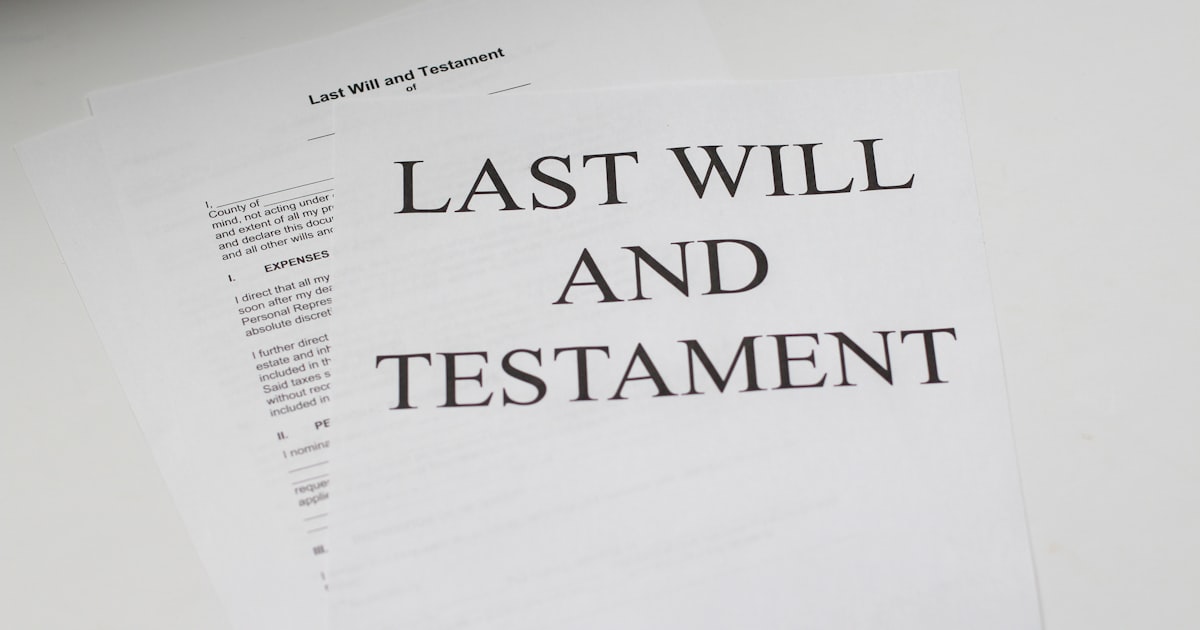
A living will and a last will and testament share three words and a near-universal misconception that they're the same document. They are not. A living will is a medical-treatment directive that takes effect during your life if you become unable to make decisions. A last will and testament is an inheritance document that takes effect at your death. The two documents are executed differently, govern entirely different things, and are read by entirely different audiences. Most adults need both, and getting them confused is one of the most common estate-planning errors.
This guide breaks down exactly what each document does, when each takes effect, what to include in each, and why the distinction matters more than people realize.
The fundamental difference
- Living will: Takes effect during life. Governs medical care when you can't speak for yourself. Tells doctors what to do — or not do — when you're incapacitated.
- Last will and testament (often just called a "will"): Takes effect at death. Governs the distribution of your property to heirs. Names guardians for minor children. Names an executor to administer the estate.
One operates while you're alive but unable to speak. The other operates after you've died. There is no overlap in their function.
Living will: medical decisions during incapacity
A living will (sometimes called an "advance directive" or part of one) is the legal document that records your wishes about specific medical treatments — CPR, mechanical ventilation, artificial nutrition and hydration, dialysis, comfort care — if you become unable to make those decisions in real time. The document activates when:
- You cannot communicate your own medical wishes (typically because of coma, advanced dementia, severe brain injury), AND
- You meet specific medical conditions stated in the document (typically terminal illness, persistent vegetative state, or end-stage condition)
The audience for a living will is medical providers — your doctors, nurses, hospital administrators. The document tells them what you would have decided if you could still decide for yourself. For the comprehensive picture of what a living will does, see our living will pillar guide.
Last will and testament: distribution of property after death
A last will and testament is the legal document that records:
- Who inherits your property at your death (your "beneficiaries")
- How specific assets are to be distributed (specific bequests, residuary clauses)
- Who will administer your estate (the "executor" or "personal representative")
- Who will care for your minor children (the "guardian," if you have minor children)
- Any specific funeral, burial, or cremation wishes
The audience for a last will is the probate court, your executor, your beneficiaries, and any creditors of your estate. The document is filed with the probate court after your death and serves as the legal authority for the executor to gather your property, pay debts and taxes, and distribute the remainder according to your wishes.
If you die without a last will (referred to as dying "intestate"), state intestacy statutes determine who inherits — usually a default distribution to spouse and children that may not match what you would have wanted. The American Bar Association maintains a consumer resources page on estate planning with overviews of intestacy by state.
Side-by-side comparison
- When it takes effect: Living will → during life, only at incapacity. Last will → at death.
- What it governs: Living will → medical treatment. Last will → distribution of property.
- Who acts on it: Living will → doctors, nurses, hospital. Last will → executor, probate court, heirs.
- Court involvement: Living will → none unless contested. Last will → typically goes through probate court.
- Witnessing requirements: Both typically require witnesses; specific rules vary by state. Last wills often require additional formalities.
- Revocability: Both revocable while you have capacity. Living will requires written revocation; last will is revoked by physical destruction or execution of a new will.
- Storage: Living will → with healthcare providers, agent, family members. Last will → with executor, attorney, or court (some states allow filing the will with probate court while alive).
Why most adults need both
The two documents address two different risks:
- Risk 1: Becoming incapacitated and unable to direct your own medical care. Without a living will, your family is left guessing what you'd want, medical providers default to maximum life-sustaining treatment, and disputes between family members about what you would have wanted can spill into court. The living will solves this.
- Risk 2: Dying without your property going to the people you intend. Without a last will, state intestacy statutes distribute your property — possibly to relatives you haven't seen in years, or in proportions that don't match your wishes. The last will solves this.
Both risks materialize for almost everyone eventually. Both documents are inexpensive to create. The combination is the foundation of any estate plan.
The other documents in a complete estate plan
The living will and the last will are usually paired with two more documents to form the four-part estate-planning core:
- Healthcare power of attorney — names a person to make medical decisions for you when you can't, complementing the living will. See our guide to types of power of attorney.
- Durable financial power of attorney — names a person to manage your finances during incapacity. See our power of attorney pillar guide.
For people with significant assets, complex families, or specific tax-planning needs, a revocable living trust is often added as a fifth document. Revocable living trusts substitute for many of the functions of the will (probate avoidance, particularly), but the will is typically still needed as a "pour-over" document to capture any assets not held in the trust.
Common confusions worth correcting
- "My living will tells my family who gets my house." No. The living will only governs medical care during incapacity. Property distribution is governed by the last will, by trust documents, by beneficiary designations on accounts, or by state intestacy law if none of those exist.
- "My last will tells doctors what to do if I'm in a coma." No. The last will is silent on medical decisions. Medical decisions during incapacity are governed by the healthcare POA and the living will.
- "I made a living will, so I don't need a last will too." No. The two documents are not interchangeable. Most adults need both.
- "Living wills are only for elderly or sick people." No. Anyone over 18 can become incapacitated unexpectedly through accident or sudden illness. The Terri Schiavo case (a 26-year-old woman in a persistent vegetative state for 15 years) prompted decades of state-law reforms specifically because young adults can need living wills too.
- "A handwritten note saying 'I don't want to be on machines' is a living will." No. Most states require specific formalities — written document, two witnesses, sometimes notarization. Handwritten notes without proper execution are usually not legally enforceable.
Cost comparison
- Living will: Free using state health department forms. $30 to $150 with online services. $150 to $500 with an attorney.
- Last will and testament: $0 to $50 with state-form templates (suitable for very simple estates). $100 to $300 with online services. $500 to $2,000 with an attorney for a standalone will, or $1,500 to $3,500 as part of a complete estate-plan package.
For most adults, the bundled estate-plan package — last will + living will + healthcare POA + financial POA, all drafted together — runs $1,500 to $3,500 with an attorney. Online legal services package the same documents for $200 to $500. Free state forms work for the simplest situations but require careful execution.
Frequently asked questions about living will vs. last will
Can a living will and a last will be combined into one document?
No, they should be separate documents because they take effect at different times, are read by different audiences, and are governed by different procedural rules. Some estate plans bundle the living will and the healthcare power of attorney into a single advance directive, but the last will is always a separate document.
If I have a living will, do I still need a last will?
Yes. The living will only addresses medical care during incapacity. Without a last will (or a living trust serving the same function), your property distributes according to state intestacy law at your death — which may not match your wishes. The two documents address completely separate risks.
Which one should I make first?
For most adults, both should be done simultaneously as part of a single estate-planning effort. If you have to pick one to start with, the living will tends to be more time-sensitive because medical incapacity can occur unexpectedly, but the practical answer is to execute all four core documents (last will, living will, healthcare POA, financial POA) together.
Do I have to file my last will or living will with the court while I'm alive?
Generally no. Both documents are typically held in private storage during the patient's life. Some states allow optional filing of the last will with the probate court for safekeeping. The living will is shared with healthcare providers but not filed with any court.
What happens if my living will and my last will say conflicting things?
They generally can't, because they govern different domains. A living will addresses medical care during incapacity; a last will addresses inheritance after death. If your last will somehow includes medical instructions (which it shouldn't), those provisions are typically given less weight than the explicit medical directives in the living will. The fix is to keep medical instructions out of the last will entirely.
Sources
- Federal authority: 42 U.S.C. § 1395cc(f) (Patient Self-Determination Act)
- Practitioner resources: ABA Section of Real Property, Trust and Estate Law — Estate Planning Resources; ABA — State Advance Directive Forms; National Academy of Elder Law Attorneys
- Consumer education: AARP — Free Printable Advance Directives by State
- Related TCL coverage: Living Will Pillar Guide; Advance Directive vs. Living Will; Power of Attorney; Types of POA; All Estate Planning coverage
This article is general information about the difference between a living will and a last will, not legal advice. Estate-planning law and document formalities vary by state. For advice on which documents you need and how to draft them for your specific situation, consult a licensed estate-planning attorney in your state. The Complete Lawyer is an independent publisher.